Showing posts with label wwmls. Show all posts

Monday, March 25, 2013

Real Estate Transport Protocol Abstract

For my next conference paper, I plan to submit the following abstract on one of the two internet protocols I invented not too long ago. Real Estate Transport Protocol (RETP) is the messaging and provisioning protocol for an eventual global multiple listing service in the not so distant future. The diagram depicts the actors and message flows. Full explanation will be discussed in the conference paper.

Title: Real Estate Transport Protocol: The Internet’s Multiple Listing Service Messenger

Abstract

Today’s multiple listing services (MLS) are antiquated, legacy systems due to tight coupling to their localized market and lack of interoperability. Moreover, these same MLSs are operated as controlled gateways eliminating public access, competition and global network distribution. This paper discusses a new internet protocol called Real Estate Transport Protocol (RETP) that resolves these inefficiencies. Using reserved internet port 32811, RETP provides a fire-and-forget messaging protocol for sending and receiving listings over the Internet to geographically distributed MLSs known as registrars. RETP creates a hub-and-spoke network topology for provisioning listings from a centralized registry to authorized registrars securely. Three messaging scenarios are discussed for demonstrating RETP’s operations: registrant to registrar, registrant to registrar to registry, and then finally, registrant to registrar to registry to multiple registrars.

Keywords: multiple listing service, internet protocol, distributed computing, network theory


RETP v1.0

--Corey

Thursday, July 26, 2012

Accredited OpenMLS Registrar Process


AOR Application Review Process


This past week, I finished one of my ucf graduate courses covering evaluation of nonprofit programs and activities. The textbook was called Evaluation: A Systematic Approach.


From my research and course work, I developed the above diagram which depicts the process for accrediting OpenMLS® Registrars in the near future. This is a beta version, however, it does encompass and satisfy evaluating requirements, documents, and supporting information for accrediting third-party organizations for becoming a fully, functional OpenMLS® connecting to the World Wide MLS (WWMLS) over the Internet.


I intend to publish the paper I submitted for this course on my papers website. The paper's title is GR8C Accredited: Developing an Accreditation Program for OpenMLS® Registrars.


--Corey

Sunday, December 11, 2011

A Nonprofit Case Study: OpenShift, JBoss, and Amazon Web Services

Last night, I submitted my abstract to the Red Hat JBoss Summit 2012 call for proposals. Below is my abstract:


A Nonprofit Case Study: OpenShift, JBoss, and Amazon Web Services


In the real estate industry, buyers and sellers are constantly researching listing property information such as status, price, and location. A Multiple Listing Service (MLS) is a localized database which association members, salespersons and broker salespersons, access to update their clients with relative property information. However, this process has become slow and outdated because of the Internet and the Web.


The Global Real Estate And Technology Consortium (GR8C) is a scientific nonprofit located in Orlando, Florida. Its mission is to promote the education, operation, and use of the World Wide Multiple Listing Service (WWMLS) to its fullest potential by developing protocols, specifications, and standards for the benefit of all people throughout the world.


This case study will provide a low-level look at the Multiple Listing Service Network Protocol (MLSN), a new request-response messaging protocol developed by the GR8C for querying property information on user reserved port 32801. The session will discuss how OpenShift is used to build, deploy, and monitor configured JBoss Application Servers as MLSN Servers to Amazon's Web Services Platform. In addition, the presenter will share key lessons learned and technical issues dealing with OpenShift. Finally, an MLSN client to MLSN server messaging demonstration will be provided.


--Corey

Sunday, November 6, 2011

Happy First Birthday WWMLS

Last Saturday marked the first birthday for the World Wide MLS (WWMLS). Since then, the follow progress has been made towards WWMLS:


As MLSN is presented to different groups such as academics and technologists, I am confident with the two upcoming presentations in 2012, especially in St. Petersburg at ARES, that the MLSN Protocol and WWMLS framework will alter others' thought processes of not only the dysfunctional aspect of today's legacy MLS, but also future directions in how real estate consumers interact and expect a specific quality of service (QoS) from real estate professionals. The main intention is integrate WWMLS in every aspect of the future of real estate.


Moving foward, the second phase for WWMLS will be the introduction of the messaging language called Real Estate Metadata Language (Remetal). This XML language will be used to markup properties in a self-describing, yet simple language for sending and receiving between the main OpenMLS Registry and accredited OpenMLS Registrars. I plan to propose Remetal to additional call for papers (CFP) on the academic and technical levels in 2012.


The third yet most important phase will be for the Real Estate Transport Protocol (RETP). This protocol defines the type of messaging, the distribution channels, error correction system, etc. Again, RETP papers will be proposed along with exhibitions at national and if necessary global science fairs.


The future of real estate is bright and changing.


And as the cliche goes, please stay tuned...


--Corey

Sunday, October 9, 2011

MLSN Abstract for ARES Conference

Today I submitted my abstract for the American Real Estate Society (ARES) conference in April next year:


Title: MLSN: A Request and Response Internet Protocol for Real Estate Property Listings


Abstract:

Sellers list their properties with real estate professionals who enter property information into private databases called Multiple Listing Services (MLS). These MLS's attempt to store and index data listings with serialized numbers that only members of the local real estate association have access to query, insert, and update. In the United States alone, there are over 900 MLS's which unfortunately create redundant, localized MLS numbers causing confusion over specific properties and their respective listing information on the Internet. These duplicated MLS numbers can be anywhere from five to ten digits long or more relaying no meaningful or geographical information to real estate professionals, sellers, and buyers alike.


This paper proposes and discusses a new internet protocol called Multiple Listing Service Network (MLSN) Protocol for registering, assigning, and distributing property listings on the Internet. Similar to the WHOIS protocol, MLSN is an application publicly available on the Internet, however instead of port 43, MLSN is accessible from reserved port 32801. The numbering scheme is comprised of two parts separated by an '@' symbol: (1) a triple-dotted notation of three decimal integers ranging from 1 to 65,535 and (2) a double-dotted notation number composed of a postal code and country code standardized by ISO 3166-1. Taking in consideration for expired listings, MLSN offers a reusable feature which allows assigning a new, double-dotted notation number to a preexisting triple-dotted number thereby creating a new MLSN property listing number. Together with a standard protocol and unique numbering schema, MLSN provides a uniform resource locator (URL) to users for conducting a more efficient and convenient real estate property searching on the Internet.


Keywords: internet, multiple listing service, protocol, internationalization


--Corey

Sunday, April 10, 2011

Graduate Research Presentation

A couple of weeks ago, I submitted my continuing research for the Multiple Listing Service Network (MLSN) Protocol to the University of Central Florida's Graduate Research Forum.


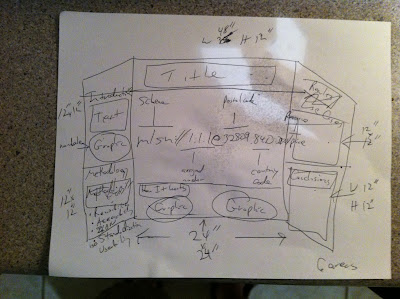
Below is an image of a conceptual drawing of my poster board presentation I sketched on the back of a napkin.


From UCF Graduate Research Forum 2011


And below is the finished product:


From UCF Graduate Research Forum 2011


As a side note, I added QR Codes for others to scan with their mobile phones and visit the presentation and specification online.


Related Links


--Corey

Saturday, February 5, 2011

MLSN Research Abstract

Next week, I will submit the following research abstract to the Graduate Research Forum at UCF. I am currently working on my Master's in Nonprofit Management in the College Public Administration. In addition to the abstract below, I will also follow up with a white paper explaining the Multiple Listing Service Network (MLSN) Protocol and system in detail.


Abstract


Sellers list their properties with real estate professionals who enter property information into private databases called Multiple Listing Services (MLS). These MLSs attempt to index listings with serialized numbers that only members of the local real estate association have access to query, insert, and update. In the United States alone, there are over 900 MLSs which unfortunately create redundant, localized MLS numbers causing confusion over specific properties and their respective listing information on the Internet. These duplicated MLS numbers can be anywhere from eight digits or more relaying no meaningful or geographical information to real estate professionals and real estate buyers alike.


In this paper I introduce a public, standardized numbering system and protocol called Multiple Listing Service Network (MLSN). Similar to the Web, MLSN is an application publicly available on the Internet, but instead of port 80, MLSN is accessible from port 32801. The numbering scheme is comprised of two parts separated by an '@' symbol: (1) a triple-dotted notation of three decimal integers ranging from 1 to 65,535 and (2) a double-dotted notation number composed of a postal code and country code defined by ISO 3166-1. Taking in consideration for expired listings, MLSN numbers have a reusable feature which allows assigning a new, double-dotted notation number to a preexisting triple-dotted number thereby creating a new MLSN number. Together with a standard protocol and unique numbering schema, a Uniform Resource Locator (URL) is available to users for searching for property listings on the Internet.


--Corey