Showing posts with label ucf. Show all posts

Monday, June 9, 2014

BlendKit Blended Course Reflection

Reflecting upon BlendKit 2014 blended course, new perspectives were gained regarding how blended courses could benefit students, as well as instructors when delivering required continuing education and licensure courses. In forming a suitable question for basing further blended course development, the following question may aid in the development process: in what ways can a blended course development approach improve effectiveness and efficiency for delivering high quality educational experiences within the real estate industry?

Implementing this question, the first benefit that my be realized is the dual allowance for learning synchronously and asynchronously by students. The opportunity for students to learn multiple and alternative may promote higher levels of cognitive learning. In addition, permitting remote participation may be more convenient at times for students, especially for those who work full-time jobs and have family responsibilities. On the contrary, those students who may have the need to directly interact with their instructors benefit from the in-class sessions eliminating the possible feeling of totally being disconnected.

From an instructor's perspective, blended course delivery may offer an increased amount of time for managing courses and responding to students' need due to the decreased amount of time required in a classroom. Moreover, integrating a blended mode may also aid in the implementation of a flipped classroom scenario. By assigning reading and work assignments for homework, students may be more attentive within the classroom since they are given the opportunity to work on their assignments before meeting in-class. Because more in-class time is available, alternative learning experiences may take place such as role playing, games, and other in-class group activities.

In conclusion, the implementation of blended courses may provide a significant impact to my future development and delivery of instructional courses. As identified in my original question, effectiveness and efficiency are two important keys to the ongoing success for my current course covering cybercrime and upcoming courses on internet privacy and cybersecurity. With this in mind, I envision offering these three courses in blended mode along with online versions at the start so that I can make proper adjustments for effectively and efficiently delivering higher learning experiences to my future students.

--Corey

Wednesday, May 21, 2014

Quality Assurance in Blended Learning

Focusing on this week's readings from my blended learning course, many questions need to be not only investigated, but also answered regarding my upcoming development and delivery of blended instructional courses. First, the question of following standardized rules and procedures for creating and instructing blended learning courses exist due to its location within the early stages of a product's life cycle. Second, instructional effectiveness was also questioned and must be addressed. The need for learners to transfer newly gained knowledge to real world applications is a critical issue for developing credibility of blended learning. Finally, a conclusion is offered for perhaps providing insight on how I may resolve issues and questions pertaining to standards and instructional effectiveness for blended learning courses.

In the reading, the lack of a formalized, authoritative body to oversee standards of blended learning was declared and discussed which translates into that the blended learning discipline is in the infantile stage and still evolving. This point was an important concern for me since I have previous experience in researching authority bodies such as the World Wide Web Consortium (W3C), Internet Corporation for Names and Numbers (ICANN), and Internet Engineering Task Force (IETF) regarding the standardization of internet protocols, web development, and cyber infrastructure. The commonality between all three of these organizations mentioned is that they are formed as nonprofits, but more importantly, tax exempt public charities for the purpose of serving the general public. With this in mind, the formation of a nonprofit organization may be a possible solution for moving forward and developing standardized blended learning course development, best practices, and open source tools which also do not exist, but were mentioned as a major problem within the discipline. Furthermore, the question of efficiency and collaboration may also be resolved if a consortium of organizations networked together to share information and strategies under the helpful hand of a neutral and public serving nonprofit organization for advancing blended learning.

Besides the need for standards and a governing body, instructional effectiveness was a a major point realized from the week's reading. In my attempt to provide effective blended learning courses in real estate science and other disciplines, I plan to develop Google Docs forms for students to submit their feedback. Both formative and summative, student feedback during and after course delivery will be a key component for my instructional development because of their alternative perspectives will render new information outside of my instructional role. The other key component for my continued growth in delivering effective blended courses will be the requesting and collecting of peer review feedback. Peer review feedback may also provide ideal and timely information for improving blended learning course delivery since others may have already encountered the same issues within their courses.

In sum, my approach for developing and delivering blended learning courses covering real estate science will be a consistent, researched approach for helping students build new knowledge. Nevertheless, it is important as an instructor and researcher to stay abreast of the latest scientific research findings concerning blended learning by reading peer reviewed articles found in academic journals. Moreover, I will also pay close attention to other academic instructors' views and methods by perhaps subscribing to mailing lists, joining forums, and attending workshops involving blended learning best practices. Lastly, the academic community within the University of Central Florida will continue to be a main resource for me to lean on as I continue to develop and deliver blended online courses.

--Corey

Saturday, February 22, 2014

Spring 2014 Graduate Courses

This spring semester I am currently taking two courses at UCF. To begin the new year, I was admitted into the Instructional Design and Technology (IDT) Master Program within the Education and Human Performance College. With a concentration in e-learning, my goal is to complete the program within three years while appling concepts, principles, and theories directly to course development for the Global Real Estate And Technology University (GR8U) where I will instruct continuing education and eventually, licensing courses. This will be my second master's degree from UCF with my sights set on additional advanced degrees in the near future.

Currently, I am enrolled in the following courses:

  • EME 6062 Research in Instructional Technology
  • EME 6614 Instructional Game Design in Training and Education

--Corey

Tuesday, December 31, 2013

Reflecting on 2013

Once again, it is that time of the year when father time forces a brand new year upon us all. However, reflecting back upon the past year is an important action for looking forward to the future.

The past year for me involved mainly one specific purpose, academics. Earlier in the year, I was enrolled in two graduate courses, Human Resources Management and Strategic Planning Management, at the University of Central Florida. These two courses were core courses within the Master of Nonprofit Management (MNM) program in which I was working towards since the Spring of 2011.

After finishing Human Resources and Strategic Planning courses, I enrolled in an elective course Organizational Behavior. The reason for taking this course was to develop a concentration in public administration to add to my specialization in nonprofit management. I found Organizational Behavior rigorous, but enlightening at the same time, during my work within the course. For the course paper, I focused on the theory behind the communication process and applied this same theory to a later course taken this past fall.

Following the summer session, I finished the MNM program by taking Public Administrators in Governance and Public Policy in the fall semester. With these two courses, I successfully balanced my graduate courses with 18 hours in nonprofit management and 18 hours in public administration. The other course taken was an elective, Cybercrime and Criminal Justice. Even though I had no prior knowledge or experience with either two, Governance and Public Policy were wonderfully rigorous and thought provoking for me. In developing papers for these courses, I researched and covered topics covering Internet Governance and a theoretical perspective on Texting and Driving for a group paper.

The culmination of this past year's courses taken lead to graduating from the MNM program approximately two weeks ago. Walking across the stage and accepting a congratulatory handshake from a UCF provost regarding my academic achievement was an important step in my academic career, but more importantly achieving a life goal I had set twenty years ago after I finished my bachelor's degree. I had promised myself to eventually attend graduate school and receive a master's degree. Check and check for 2013.

Looking forward, I begin the next chapter in my academic career by taking e-Learning courses, Adult Learning and Research in Instructional Technology. My new goal for 2014 is to work towards a second master's degree in Instructional Design and Technology. Delivering future instructional courses online and in the classroom are reasons for working towards a Master in Arts degree. In addition, I intend to apply e-Learning theories and principles gained towards areas in human rights and citizen engagement within the domain of International Relations.

In summary, 2013 was a enlightening year academically speaking. 2014 will definitely be more of the same.

--Corey

Tuesday, March 19, 2013

MNM Final Three

Unfortunately, I have not yet filled out my NCAA Final Four bracket out, but I did register for my final three courses for my Master in Nonprofit Management at the University of Central Florida. Technically, I really only have two more courses left to fulfill the thirty-six mandatory hours for graduation. However, I registered for an extra public administration course so that I will have a total of six public administration courses for the option of adjuncting government related courses if I so choose in the future. Most colleges and universities require at least eighteen hours of related post-secondary courses to instruct online or face-to-face.

Here are my final three courses:

Summer 2013:
PAD 6037 Public Organization Management

Fall 2013:
PAD 6035 Public Administration in the Policy Process

PAD 6053 Public Administration in Governance

Ironically, the degree is called a Master of Nonprofit Management, however I will have taken the same amount of course work hours, eighteen, in nonprofit and public administration within the program. The other, unrelated course taken was Cybercrime from the Digital Forensics program.

--Corey

Thursday, March 14, 2013

Thirty-eight Iterations


For my UCF graduate course in Strategic Human Resources Management (SHRM), I am required to write a literature review on a current and broad topic on SHRM. I chose the topic of sexual harassment and the internet within the workplace. My motivation is to survey current policies and best practices for implementing.


For developing the title, here are the 38 title iterations with the last title being the chosen one:


  1. NSFW: Are parental controls needed for employees in the workplace?

  2. NSFW: Are internet parental controls necessary for employees in the workplace

  3. NSFW: Is internet content filtering necessary for employees in the workplace?

  4. NSFW: Are internet parental controls necessary for filtering employee content in the workplace?

  5. NSFW: Are parental controls necessary for filtering employee internet content in the workplace?

  6. NSFW: Is internet content filtering necessary for employees in the workplace?

  7. NSFW: Is internet content filtering necessary for managing employees in the workplace?

  8. NSFW: Is filtering internet content necessary for employees in the workplace?

  9. NSFW: Are parental controls necessary for filtering employee internet content in the workplace?

  10. NSFW: Are parental controls necessary for filtering internet content in the workplace?

  11. NSFW: Protecting the workplace with internet content filtering

  12. NSFW: Protecting nonprofit employees using internet content filtering

  13. NSFW: Do nonprofit employees need internet content filtering protection?

  14. NSFW: Is internet content filtering necessary for nonprofit employees in the workplace?

  15. NSFW: Combating Internet Pollution within the workplace

  16. NSFW: How should nonprofits combat internet pollution in the workplace?

  17. NSFW: Are internet parental controls needed for nonprofit employees in the workplace?

  18. Not Safe For Work: Does filtering internet content create walled gardens?

  19. Not Safe For Work: Does filtering internet content inhibit the freedom to browse in the workplace?

  20. Not Safe For Work: Does filtering NSFW internet content create walled gardens?

  21. Not Safe For Work: Does filtering NSFW internet content prohibit freedom in the nonprofit workplace?

  22. Not Safe For Work: Does filtering NSFW content prohibit internet freedom within the workplace?

  23. Not Safe For Work: Does filtering NSFW content prohibit internet freedom within the nonprofit workplace?

  24. Not Suitable For Work: Does filtering NSFW internet content prohibit open access freedom within the workplace?

  25. Not Suitable for Work: Do workplaces need parental controls for filtering NSFW internet content?

  26. Not Safe For Work: Do employees in nonprofit workplaces need internet parental controls for filtering out NSFW content?

  27. Not Safe For Work: Avoiding Censorship from Internet Content Filtering in the Workplace

  28. Not Safe For Work: Handling Censorship from Internet Content Filtering in the Workplace

  29. Not Safe For Work: Managing Internet Content Filtering and Censorship within Nonprofit Organizations

  30. Not Safe For Work: Managing Internet Content Filtering Policy within Nonprofit Organizations

  31. Not Safe For Work: Policy Management for Internet Content Filtering within Nonprofit Organizations

  32. Not Safe For Work: Workplace Policy Management for Internet Content Filtering Within Nonprofit Organizations

  33. Not Safe For Work: Addressing Internet Content Filtering for Formulating A Workplace Policy Within Nonprofit Organizations

  34. Not Safe For Work: Balancing Internet Content Filtering versus Online Censorship for Nonprofit Organizations

  35. Not Safe For Work: Nonprofit Policy Management for Internet Content Filtering and Censorship in the Workplace

  36. Not Safe For Work: Public Policy Management for Internet Content Filtering

  37. Not Safe For Work: Implications of Internet Content Filtering on Public Policy within the Workplace

  38. Not Safe for Work: A Survey in Workplace Policy on Sexual Harassment and the Internet


I intend to post the literature review online for others to read and comment after I complete the assignment at the end of the semester.


--Corey

Friday, July 27, 2012

Evaluation Paper Excecutive Summary

The following is the executive summary from my evaluation paper entitled:


GR8C Accredited: Developing an Accreditation Program for OpenMLS® Registrars


This proposal was researched and developed for the Global Real Estate And Technology Consortium (GR8C). It specifies an accreditation review program for accrediting Candidate Registrars (CR) along with a compliance review for future registrar compliance after the accreditation phase. In addition, the proposal addresses current issues concerning current Multiple Listing Services (MLS) by creating a certification framework called the Accredited OpenMLS® Registrar (AOR) Program which includes three areas of evaluation: management, financial and information technology. These three areas are comprised of evaluation questions researched from the literature review.


The implementation plan begins with assembling an AOR Review Team. Once the team is assembled and properly trained, an open application window phase is initiated and slated for June 1, 2013. Online applications are accepted and reviewed by the AOR Review Team until the close of the open application window phase which closes August 30, 2013. The AOR Review Team performs background checks, management reviews, financial status inquiries and technology experience credentials before rendering a decision of approval or rejection for accreditation status. The AOR Review Team will also conduct randomly selected compliance reviews of AORs for continuous compliance. With the AOR Program and Compliance Program fully operational, future AOR application windows will open to more candidate registrars globally for potential accreditation and ongoing compliance.


All dates are tentative.


--Corey

Thursday, July 26, 2012

Accredited OpenMLS Registrar Process


AOR Application Review Process


This past week, I finished one of my ucf graduate courses covering evaluation of nonprofit programs and activities. The textbook was called Evaluation: A Systematic Approach.


From my research and course work, I developed the above diagram which depicts the process for accrediting OpenMLS® Registrars in the near future. This is a beta version, however, it does encompass and satisfy evaluating requirements, documents, and supporting information for accrediting third-party organizations for becoming a fully, functional OpenMLS® connecting to the World Wide MLS (WWMLS) over the Internet.


I intend to publish the paper I submitted for this course on my papers website. The paper's title is GR8C Accredited: Developing an Accreditation Program for OpenMLS® Registrars.


--Corey

Sunday, November 6, 2011

Happy First Birthday WWMLS

Last Saturday marked the first birthday for the World Wide MLS (WWMLS). Since then, the follow progress has been made towards WWMLS:


As MLSN is presented to different groups such as academics and technologists, I am confident with the two upcoming presentations in 2012, especially in St. Petersburg at ARES, that the MLSN Protocol and WWMLS framework will alter others' thought processes of not only the dysfunctional aspect of today's legacy MLS, but also future directions in how real estate consumers interact and expect a specific quality of service (QoS) from real estate professionals. The main intention is integrate WWMLS in every aspect of the future of real estate.


Moving foward, the second phase for WWMLS will be the introduction of the messaging language called Real Estate Metadata Language (Remetal). This XML language will be used to markup properties in a self-describing, yet simple language for sending and receiving between the main OpenMLS Registry and accredited OpenMLS Registrars. I plan to propose Remetal to additional call for papers (CFP) on the academic and technical levels in 2012.


The third yet most important phase will be for the Real Estate Transport Protocol (RETP). This protocol defines the type of messaging, the distribution channels, error correction system, etc. Again, RETP papers will be proposed along with exhibitions at national and if necessary global science fairs.


The future of real estate is bright and changing.


And as the cliche goes, please stay tuned...


--Corey

Thursday, September 29, 2011

Grant Search Abstract

My grants and contracts course involves the delivery of a research topic paper within the duration of the semester course. Since online grant search was barely discussed in our required readings, I chose the topic title, "Using Advanced Google Search Algorithms for Grant Searching."


Today I submitted the abstract to my professor which follows:


These days nonprofit organizations more than ever need help finding new opportunities in grant funding for their organizations to continue to operate and ultimately complete their mission statements. An obvious choice is searching online. However, developing search criteria such as using relative keywords, including specific sites, or even excluding superfluous search terms can be complex and time consuming process. With this in mind, would nonprofit organizations benefit from developing advanced search algorithms when searching online for new and available grants?


This research project will attempt to answer this question using the Google search engine along with various supporting online tools. Methods for searching and data collection will involve experimenting with order, exclusion, phrases, and other specific Google search parameters. Even though the main key search terms for this research project will be "technology" and "real estate", these terms can be simply replaced with alternative industry terms to satisfy other nonprofit organizations' search requirements. Results from the experimental searches will hopefully provide a clearer picture into the world of grant searching on the Internet using a search engine. Finally, a conclusion will summarize findings along with commentary for using advanced search algorithms by nonprofit organizations when searching for online grant funding.


I look forward to beginning the experimental search algorithms for data collection followed by publishing results for the research paper.


--Corey

Sunday, April 10, 2011

Graduate Research Presentation

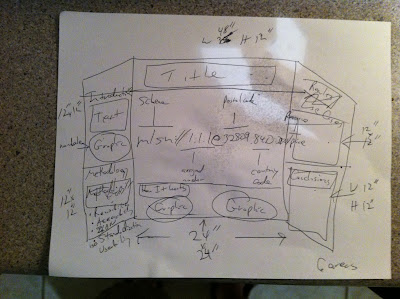
A couple of weeks ago, I submitted my continuing research for the Multiple Listing Service Network (MLSN) Protocol to the University of Central Florida's Graduate Research Forum.


Below is an image of a conceptual drawing of my poster board presentation I sketched on the back of a napkin.


From UCF Graduate Research Forum 2011


And below is the finished product:


From UCF Graduate Research Forum 2011


As a side note, I added QR Codes for others to scan with their mobile phones and visit the presentation and specification online.


Related Links


--Corey