Friday, September 30, 2011

The Birth of Real Estate Science

Throughout my travels, I have noticed a change. A change residing within the Real Estate Industry. In years past, Real Estate was generally accepted as a "financial" type of industry where economics, finance, and sales concepts and methodologies have ruled.


Enter the Internet and the World Wide Web. All of sudden, Real Estate changed. It had to change because everyone went from using offline tools, calculators and spreadsheets, to using online tools such as Google Apps, the Social Web, and online banking.


Because of these changes, Real Estate was no longer just a "financial" industry, but also a "computer science" industry deeply embedded into the industry. Having realized this, I began researching this phenomenon by reading, listening, and discovering the new ways real estate users (buyers, sellers, agents, consultants, etc.) now do business.


My observations have given way to new research I call:


Real Estate Science: A New Scientific Body of Knowledge and Academic Discipline


A brief explanation and upcoming paper of what Real Estate Science is follows:


The Internet and World Wide Web have been immensely influential components on the Real Estate Industry. From the brokerage enterprise to daily salespersons' activities, computers are involved in every facet of a real estate project or transaction. With millions of mobile devices connected to the Web, the real estate industry has fully embraced the world of computing. Therefore, one can say that the Real Estate Industry has literally transformed itself from a one-dimensional financial industry into a technology dependent juggernaut overnight.


To better understand this evolution, I propose a new discipline and body of knowledge to better understand, analyze, study, and document technology related concepts so we may be able to educate future real estate users along with existing ones. This paper discusses the needs and justifications for a new academic discipline or academic field called Real Estate Science (Re-Sci). Real Estate Science will combine theories and concepts from both the Real Estate Industry and the Computer Science field, respectively. Real world use cases will be used to demonstrate why this new body of knowledge is necessary to implement and move forward into the twenty-first century and beyond.


-- Corey, "the Father of Real Estate Science"

Thursday, September 29, 2011

Grant Search Abstract

My grants and contracts course involves the delivery of a research topic paper within the duration of the semester course. Since online grant search was barely discussed in our required readings, I chose the topic title, "Using Advanced Google Search Algorithms for Grant Searching."


Today I submitted the abstract to my professor which follows:


These days nonprofit organizations more than ever need help finding new opportunities in grant funding for their organizations to continue to operate and ultimately complete their mission statements. An obvious choice is searching online. However, developing search criteria such as using relative keywords, including specific sites, or even excluding superfluous search terms can be complex and time consuming process. With this in mind, would nonprofit organizations benefit from developing advanced search algorithms when searching online for new and available grants?


This research project will attempt to answer this question using the Google search engine along with various supporting online tools. Methods for searching and data collection will involve experimenting with order, exclusion, phrases, and other specific Google search parameters. Even though the main key search terms for this research project will be "technology" and "real estate", these terms can be simply replaced with alternative industry terms to satisfy other nonprofit organizations' search requirements. Results from the experimental searches will hopefully provide a clearer picture into the world of grant searching on the Internet using a search engine. Finally, a conclusion will summarize findings along with commentary for using advanced search algorithms by nonprofit organizations when searching for online grant funding.


I look forward to beginning the experimental search algorithms for data collection followed by publishing results for the research paper.


--Corey

Tuesday, June 14, 2011

Abstract for CyberCrime Course Paper

This semester I'm taking a graduate course in cybercrime, "CyberCrime and Criminal Justice". For my course paper I chose the topic of firewalls in the enterprise. Below is my paper's title and abstract:


Defending Against Cybercrime with Firewalls


From mission critical web applications to customer databases, businesses must ensure their information technology services are secure from potential hackers. Battling cybercrime is an ongoing war for all organizations these days. One approach to combating unauthorized network access is the use of firewalls.


This paper discusses the basics of firewalls, hardening of servers, and software specific firewalls such as iptables. In addition, I will discuss different network architectures scenarios involving public network services or DeMilitarized Zone (DMZ), private network services, and honeypots. Finally, I will cover tools for detecting possible intrusions and system log monitoring.


--Corey

Sunday, April 10, 2011

Graduate Research Presentation

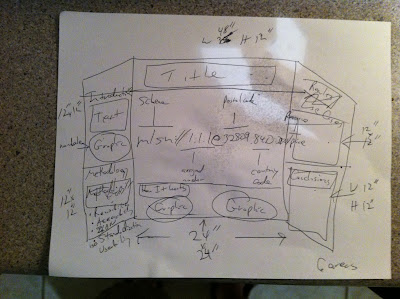
A couple of weeks ago, I submitted my continuing research for the Multiple Listing Service Network (MLSN) Protocol to the University of Central Florida's Graduate Research Forum.


Below is an image of a conceptual drawing of my poster board presentation I sketched on the back of a napkin.


From UCF Graduate Research Forum 2011


And below is the finished product:


From UCF Graduate Research Forum 2011


As a side note, I added QR Codes for others to scan with their mobile phones and visit the presentation and specification online.


Related Links


--Corey

Saturday, February 5, 2011

MLSN Research Abstract

Next week, I will submit the following research abstract to the Graduate Research Forum at UCF. I am currently working on my Master's in Nonprofit Management in the College Public Administration. In addition to the abstract below, I will also follow up with a white paper explaining the Multiple Listing Service Network (MLSN) Protocol and system in detail.


Abstract


Sellers list their properties with real estate professionals who enter property information into private databases called Multiple Listing Services (MLS). These MLSs attempt to index listings with serialized numbers that only members of the local real estate association have access to query, insert, and update. In the United States alone, there are over 900 MLSs which unfortunately create redundant, localized MLS numbers causing confusion over specific properties and their respective listing information on the Internet. These duplicated MLS numbers can be anywhere from eight digits or more relaying no meaningful or geographical information to real estate professionals and real estate buyers alike.


In this paper I introduce a public, standardized numbering system and protocol called Multiple Listing Service Network (MLSN). Similar to the Web, MLSN is an application publicly available on the Internet, but instead of port 80, MLSN is accessible from port 32801. The numbering scheme is comprised of two parts separated by an '@' symbol: (1) a triple-dotted notation of three decimal integers ranging from 1 to 65,535 and (2) a double-dotted notation number composed of a postal code and country code defined by ISO 3166-1. Taking in consideration for expired listings, MLSN numbers have a reusable feature which allows assigning a new, double-dotted notation number to a preexisting triple-dotted number thereby creating a new MLSN number. Together with a standard protocol and unique numbering schema, a Uniform Resource Locator (URL) is available to users for searching for property listings on the Internet.


--Corey

Tuesday, September 21, 2010

Repatterns Book in Development

Repatterns: Applying Computer Science and Design Patterns to Real Estate


After some research, I've decided to include my previous book projects, "The Web is the MLS", and "Real Estate Is Global", into one single book with the tentative title and subtitle, "Repatterns: Applying Computer Science and Design Patterns to Real Estate." The reason for the two-in-one inclusions was because I felt the two previous book efforts were similar enough patterns extending the same pattern, Network Pattern, to be included into one full patterns book covering real estate and computer science together.


Here's a working abstract for the book:


Patterns are everywhere. We live in a world of visible and invisible patterns. From our birth, patterns exist to help us learn, to save time, and to be productive. This book will apply principles from computer science and well known design patterns to the business processes and procedures within the Real Estate industry. From these patterns, you will discover inefficient patterns, anti-patterns, along with learning how to think differently by replacing such anti-patterns with more efficient design patterns.


For the new book cover, I reused the "The Web Is The MLS" cover since the design was already very "patternistic" in nature. In addition, the textual change in inkscape was very easy to do.


Tentative Book Contents:


Table of Contents
Preface
Ch1 Introduction
Ch2 Factory Pattern
Ch3 Observer Pattern
Ch4 Mediator Pattern
Ch5 Request-Response Pattern
Ch6 Point-to-Point Pattern
Ch7 Facade Pattern
Ch8 Network Pattern
Ch9 Proxy Pattern
Ch10 Compound Patterns
Appendix
Glossary
Index


I look forward to working on this project while at the same time using these patterns on my current projects. Lastly, I hope others will also learn to recognize anti-patterns and design patterns within real estate or their respective industry because of this work.


--Corey

Friday, July 16, 2010

Listing Object Model (LOM) Core

LOM Core 25 Elements

Intro


Lately my interests have gravitated toward web services and marking up listing information to xml. However, another inefficiency within the Real Estate Industry is how listing information is distributed to web endpoints. Within HTML, Word, or an Excel spreadsheet, I cringe at the ways listing information is being sent from an end user to service provider or service provider to service provider. Remember I'm talking old school here, average age is in the 50's and climbing.


So with that stomach churning thought in 3d motion, I thought to myself wouldn't it be great to have a minimalistic shortlist of elements to markup a listing for Grandma, a tween, or anyone else in need of a simple service like this. In the past, I've used Dublin Core, a specification of 15 meta tags for semantically describing documents. Thinking to myself, "LOM Core must be very simple like Dublin Core because simple always wins on the net."


Without hesitation, I proceeded to diagram (see above) a list of essential words or elements which would describe a lowest common denominator real estate listing. I came up with the following at first, in no particular order (well alphabetical):


LOM Core 25 Elements


  • address

  • agent

  • beds

  • baths

  • city

  • contact

  • country

  • description

  • email

  • firstname

  • lastname

  • listing

  • location

  • organization

  • owner

  • phonenumber

  • postalcode

  • price

  • size

  • state

  • status

  • style

  • squarefeet

  • squaremeters

  • type


I stopped at 25 to keep it as simple as possible. Obviously, I could have kept going but simple would have easily morphed into complex.


Use Cases


Since we now have our shortlist of elements, we need a business purpose or use case. I came up with five, initially, but of course we are not limited to only these.


1. For Sale By Owner Lisiting


[sourcecode language="css"]
<?xml version="1.0" encoding="UTF-8"?>
<listing>
<type>residential</type>
<style>Single Family</style>
<beds>3</beds>
<baths>2</baths>
<size>
<squarefeet>2000</squarefeet>
</size>
<location>
<address>1234 My Street</address>
<city>Orlando</city>
<state>FL</state>
<postalcode>32801</postalcode>
<country>US</country>
</location>
<description>Modern and functional.</description>
<status>active</status>
<price>$150,000</price>
<contact>
<owner>
<firstname>John</firstname>
<lastname>Smith</lastname>
<phonenumber>555-3333</phonenumber>
<email>jsmith@john.smith.name</email>
</owner>
</contact>
</listing>
[/sourcecode]

2. Residential Agent Listing


[sourcecode language="css"]
<?xml version="1.0" encoding="UTF-8">
<listing>
<type>residential</type>
<style>Single Family</style>
<beds>4</beds>
<baths>2</baths>
<size>
<squarefeet>3000</squarefeet>
</size>
<location>
<address>5678 Your Street</address>
<city>Orlando</city>
<state>FL</state>
<postalcode>32801</postalcode>
<country>US</country>
</location>
<description>Family size.</description>
<status>active</status>
<price>190,500</price>
<contact>
<agent>
<firstname>Jane</firstname>
<lastname>Doe</lastname>
<phonenumber>555-5555</phonenumber>
<email>jdoe@jane.doe.name</email>
<organization>Jane Doe Realty</organization>
</agent>
</contact>
</listing>
[/sourcecode]

3. Commercial Owner Listing


[sourcecode language="css"]
<?xml version="1.0" encoding="UTF-8"?>
<listing>
<type&gt;commercial</type>
<style>office</style>
<size>
<squarefeet>3000</squarefeet>
</size>
<location>
<address>1010 Biz Way Suite 200</address>
<city>Orlando</city>
<state>FL</state>
<postalcode>32801</postalcode>
<country>US</country>
</location>
<description>Build to suit office space.</description>
<status>active</status>
<price>$100/sqft</price>
<contact>
<owner>
<firstname>Bob</firstname>
<lastname>Johnson</lastname>
<phonenumber>555-9999</phonenumber>
<email>bjohnson@bob.johnson.name</email>
</owner>
</contact>
</listing>
[/sourcecode]

4. Commercial Agent Listing


[sourcecode language="css"]
<?xml version="1.0" encoding="UTF-8"?>
<listing>
<type>commercial</type>
<style>office</style>
<size>
<squarefeet>4000</squarefeet>
</size>
<location>
<address>2020 Easy Street Suite 300</address>
<city>Orlando</city>
<state>FL</state>
<postalcode>32801</postalcode>
<country>US</country>
</location>
<description>Plenty of space for cubicles. Build to suit.</description>
<status>active</status>
<price>$200/sqft</price>
<contact>
<agent>
<firstname>Jen</firstname>
<lastname>Wright</lastname>
<phonenumber>555-7777</phonenumber>
<email>jwright@jen.wright.name</email>
<organization>Wright Realty</organization>
</agent>
</contact>
</listing>
[/sourcecode]

5. International Listing


[sourcecode language="css"]
<?xml version="1.0" encoding="UTF-8"?>
<listing>
<type>commercial</type>
<style>bank</style>
<size>
<squaremeters>1000</squaremeters>
</size>
<location>
<address>7 Picardy Place</address>
<city>Edinburgh</city>
<postalcode>EH1 3JT</postalcode>
<country>Scotland</country>
</location>
<description>Former bank branch, build to suit</description>
<status>active</status>
<price>300EUR/sqmt</price>
<contact>
<agent>
<firstname>Will</firstname>
<lastname>Jones</lastname>
<phonenumber>0131 5554343</phonenumber>
<email>wjones@will.jones.name</email>
<organization>Jones Realty</organization>
</agent>
</contact>
</listing>
[/sourcecode]

Summary


In sum, LOM Core is a simplified shortlist of 25 core real estate elements allowing anyone to markup a residential or commercial listing. The examples above are soley for exercise purposes, but as you can see LOM can adapt to different types of listings quite effortlessly. The next step is to solidify schemas (DTD, XML Schema, RelaxNG) for validating followed by creating a web-based tool using a form for users to enter in their listing elements to create a LOM Core listing on the fly. Users could then send or copy and paste the LOM Core listing and distribute and transform as needed.


--Corey